
Teacher Observations vs Classroom Observations
What’s the Difference and Why It Matters
In the world of modern education, the pursuit of instructional excellence is a constant journey. Whether you are an administrator, a veteran educator, or a policy-maker, you have likely used the terms teacher observations and classroom observations interchangeably. On the surface, they seem like two sides of the same coin: someone enters a room, watches a lesson, and takes notes.
However, as the demands on our schools evolve, the distinction between these two practices has become a critical pivot point for professional growth and institutional success. Understanding the nuances between observing a person and observing an environment is not just a matter of semantics, it is the difference between performative compliance and genuine pedagogical transformation.
The Differences
To understand why this matters, we must first establish clear definitions for both terms. While they share the same physical space, their objectives, data points, and outcomes often diverge.
What are Teacher Observations?
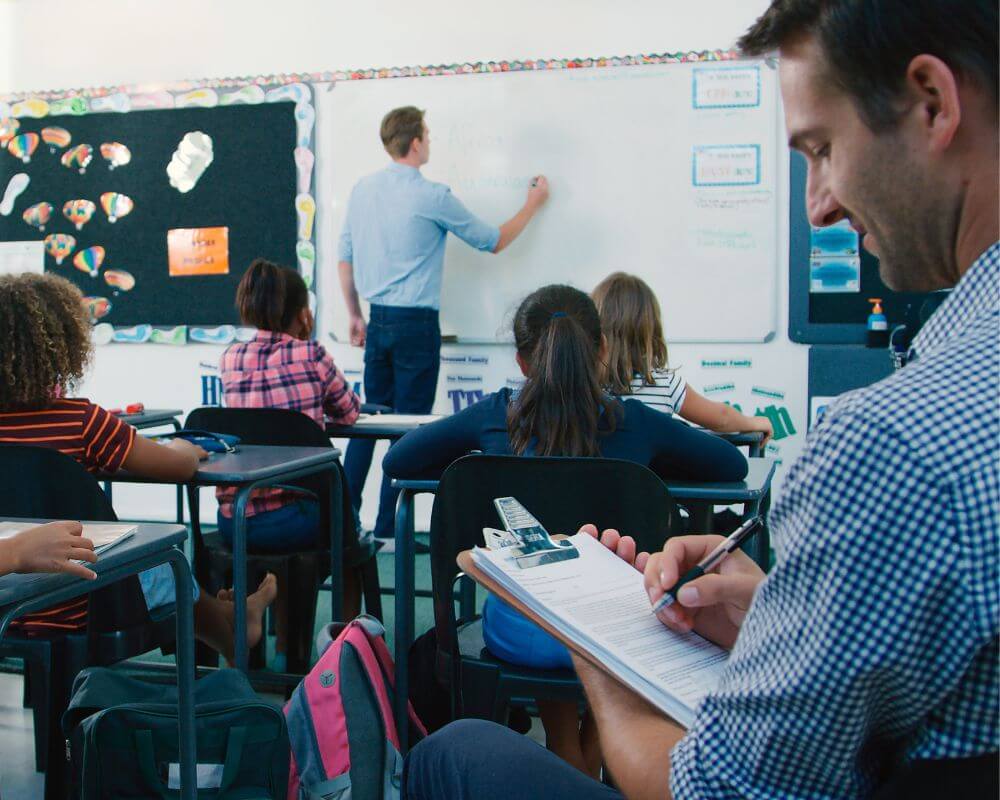
Teacher observations are typically focused on the individual practitioner. In most school districts, this is a formal process tied to evaluation, tenure, or performance reviews. The primary lens is the teacher’s behavior:
- How is the teacher delivering the content?
- How are they managing student behavior?
- Are they following the prescribed curriculum?
The goal here is often accountability. It answers the question: Is this teacher meeting the professional standards set by the district?
What are Classroom Observations?
Classroom observations, by contrast, take a more holistic, systemic view. Instead of putting the spotlight solely on the teacher, this method examines the entire ecosystem of learning. It looks at the interplay between the teacher, the students, the physical space, and the materials.
A classroom observation might prioritize:
- Student engagement levels.
- The flow of peer-to-peer discourse.
- The accessibility of the learning environment.
- The effectiveness of the instructional tools.
The goal is often diagnostic or developmental. It answers the question: What is the quality of the learning experience occurring in this space?
Why the Distinction Matters for Schools
When a school fails to distinguish between these two, it creates a “feedback vacuum.” If every visit to a room is treated as a high-stakes teacher observation, educators often feel the need to “put on a show,” performing a perfect, polished version of a lesson that may not represent the daily reality of their practice.
Conversely, when schools embrace the broader scope of classroom observations, they foster a culture of transparency. It shifts the narrative from “I am judging you” to “We are analyzing the learning together.”
1. The Psychology of Professional Growth
The human brain does not learn well under the fight or flight response. When a teacher knows they are being formally evaluated (Teacher Observation), their primary objective is often risk mitigation. They may avoid innovative but “messy” teaching strategies in favor of safe, traditional methods.
When the focus shifts to the classroom environment (Classroom Observation), the teacher is no longer the sole variable under the microscope. This reduces anxiety and opens the door for authentic reflection on student outcomes rather than just teacher performance.
2. Data Quality and Instructional Coaching
Data collected during a teacher observation is often person-specific. While useful for HR files, it isn’t always the best fuel for instructional coaching. For example, knowing a teacher needs to improve questioning techniques is a teacher-centric data point.
In contrast, a classroom observation might reveal that students in the back left corner only engaged with the material 20% of the time during the lecture. This is an environmental data point. It allows a coach to work with the teacher on seating charts, proximity, or differentiated delivery, shifting the problem from a personal failing to a solvable classroom dynamic.
The Key Components of Effective Teacher Observations
For a school to thrive, formal teacher observations are still necessary. They provide the framework for professional standards. However, for these to be effective, they must move beyond a checklist mentality.
Evidence-Based Feedback
The best teacher observations are rooted in objective evidence rather than subjective opinion. Instead of saying, “The lesson was good,” an observer should say, “You utilized three different check-for-understanding strategies within a 15-minute window.” This level of detail provides a roadmap for the teacher to replicate their successes.
The Power of Pre- and Post-Conferences
A teacher observation should never be a gotcha moment.
- The Pre-Conference: Allows the teacher to set the stage, explaining the specific needs of their students and what they hope to achieve.
- The Post-Conference: Is a collaborative space where the observer and teacher analyze the evidence together. This turns a top-down evaluation into a two-way conversation.
Elevating the Classroom Observation: The Holistic View
If teacher observations are the “what,” classroom observations are the “how” and “why.” To implement high-quality classroom observations, school leaders should look for the “Instructional Core”—the relationship between the teacher, the student, and the content.
Mapping Student Engagement
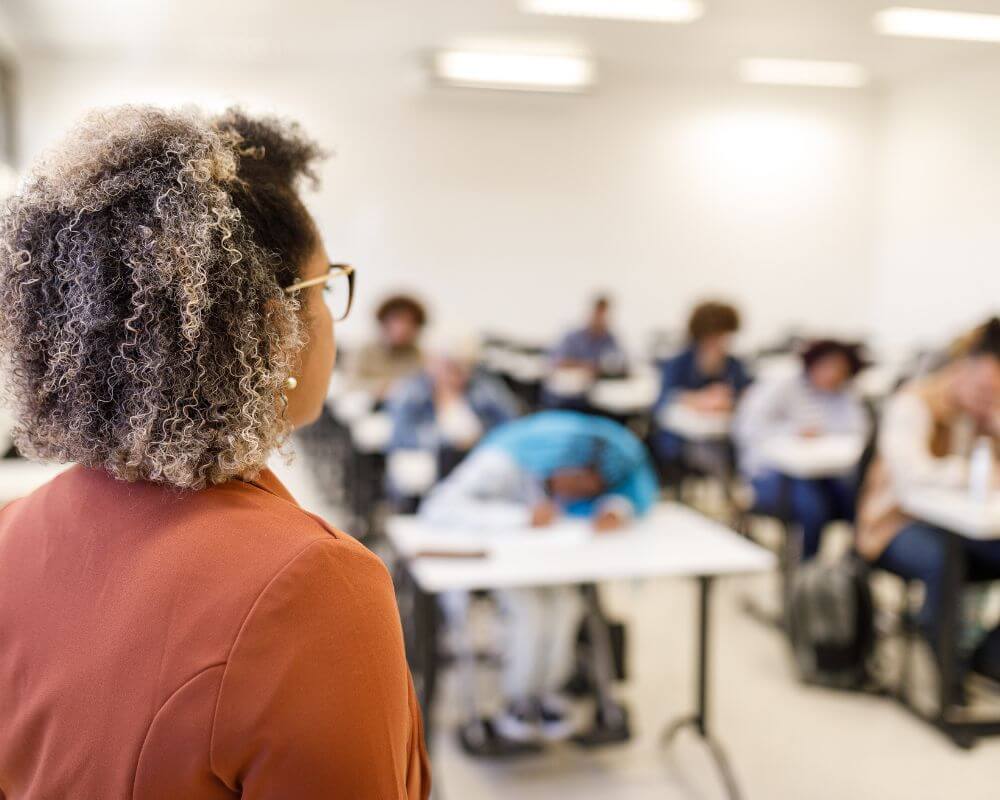
In a classroom observation, the observer’s eyes are often on the students more than the teacher. Are students talking to each other about the task? Are they using academic language? Are they passive recipients of information or active creators of knowledge? By documenting these patterns, schools can identify systemic gaps in student agency.
Assessing the Environment
Does the physical layout of the room support the lesson’s goal? If a teacher is trying to facilitate a Socratic Seminar but the desks are in rigid rows, the classroom observation will highlight that physical barrier. This allows for a conversation about how the “third teacher,” the environment, can be optimized for better results.
Integrating Both for School Success
The most successful schools don’t choose one over the other; they integrate both into a comprehensive professional development plan. They use teacher observations to ensure a baseline of professional excellence and classroom observations to drive continuous, collaborative improvement.
By naming the difference, we empower teachers to be more than just performers. We empower them to be clinical practitioners who are constantly refining the complex, beautiful, and vital ecosystem of the classroom.
Common Pitfalls Schools Must Avoid
Even with a clear understanding of teacher observations and classroom observations, many schools struggle to implement them effectively. The issue is not a lack of intention, but a lack of clarity in execution. Without thoughtful systems, both observation types can lose their impact and become routine tasks rather than transformational tools.
Treating All Observations the Same
One of the most common mistakes is failing to differentiate between teacher observations and classroom observations in practice. Administrators may intend to conduct a low-stakes classroom observation, but if the process feels evaluative, teachers will still respond defensively.
This creates a blurred experience where every observation feels high-pressure. Over time, this leads to surface-level teaching during observations and prevents administrators from seeing authentic classroom dynamics.
To avoid this, schools must clearly communicate the purpose of each observation type. Teachers should know whether the visit is evaluative or developmental before the observer even steps into the room.
Over-Reliance on Checklists
Checklists can be helpful, but they often reduce complex teaching practices into rigid boxes. When observers rely too heavily on them, they miss the deeper story unfolding in the classroom.
For example, a checklist might confirm that a teacher used questioning strategies. However, it does not capture whether those questions sparked meaningful thinking or genuine student discussion.
Effective observation systems prioritize narrative evidence over simple compliance. They focus on what actually happened in the room, not just whether certain actions occurred.
Lack of Follow-Up
An observation without meaningful follow-up is a missed opportunity. Whether it is a teacher observation or a classroom observation, the real value comes from reflection and next steps.
Too often, feedback is delayed, vague, or overly general. Comments like “great job” or “keep working on engagement” do not provide actionable direction.
Instead, feedback should be timely, specific, and tied directly to observable evidence. This transforms observations from isolated events into part of an ongoing professional growth cycle.
The Role of Technology in Modern Observations
As schools evolve, technology is becoming an essential component of both teacher observations and classroom observations. When used effectively, it removes friction, increases consistency, and improves the quality of feedback.
Streamlining Data Collection
Digital tools allow observers to capture evidence in real time without disrupting the flow of the lesson. Instead of juggling paper notes or relying on memory, administrators can document specific moments as they happen.
This leads to more accurate and detailed feedback. It also allows schools to build a repository of observation data over time, creating a clearer picture of instructional trends.
Identifying School-Wide Patterns
One of the most powerful benefits of technology is the ability to aggregate data across classrooms. While a single observation provides insight into one teacher or one lesson, aggregated data reveals systemic patterns.
For example, a school might discover that student engagement consistently drops during independent work time. This insight would not emerge from isolated teacher observations alone. It requires a broader classroom observation lens supported by data.
With this information, school leaders can design targeted professional development that addresses real needs rather than assumptions.
Enhancing Instructional Coaching
Technology also strengthens instructional coaching by making feedback more actionable. Coaches can reference specific data points, trends, and examples rather than relying on general impressions.
This shifts coaching conversations from opinion-based to evidence-based. It also builds trust with teachers, as feedback feels grounded in reality rather than personal judgment.
Platforms like Feedback Flock are designed to bridge this gap by combining teacher observations and classroom observations into one streamlined system. By capturing both individual performance and classroom dynamics, schools can create a more complete picture of instructional effectiveness.
Actionable Steps for Administrators
Understanding the difference between teacher observations and classroom observations is only the first step. The real impact comes from implementation. Here are practical strategies school leaders can use to bring both approaches to life.
1. Clearly Define Observation Types
Start by creating clear definitions for teacher observations and classroom observations within your school or district.
Document the purpose, frequency, and expectations for each type. Make sure every staff member understands the distinction. This clarity reduces anxiety and builds trust in the process.
2. Normalize Frequent, Low-Stakes Visits
The more often administrators are present in classrooms, the less intimidating observations become. Short, informal classroom observations help build a culture of transparency.
When teachers see observation as a normal part of the school day rather than a rare event, they are more likely to teach authentically.
3. Focus on Student Experience
During classroom observations, train observers to prioritize what students are doing rather than what the teacher is doing.
Ask questions like:
- Are students actively engaged in the task?
- Are they thinking critically or simply completing steps?
- Are they collaborating and communicating effectively?
This shift in focus leads to more meaningful insights about the quality of learning.
4. Use Evidence-Based Feedback
Whether conducting teacher observations or classroom observations, feedback should always be grounded in specific evidence.
Instead of saying, “Students seemed disengaged,” say, “During the 10-minute independent work period, 8 out of 20 students were off task or not interacting with the material.”
This level of specificity makes feedback actionable and objective.
5. Create a Feedback Loop
Observations should not be one-time events. They should be part of an ongoing cycle that includes:
- Observation
- Feedback
- Reflection
- Implementation
- Re-observation
This continuous loop ensures that feedback leads to real improvement over time.
6. Align Observations with Professional Development
Use observation data to inform your professional development strategy. If classroom observations reveal common challenges, address them through targeted training sessions.
This alignment ensures that professional development is relevant and impactful rather than generic.
Building a Culture of Growth, Not Compliance
At its core, the difference between teacher observations and classroom observations is about mindset. One focuses on evaluating performance, while the other focuses on improving systems.
Schools that rely solely on teacher observations often create a culture of compliance. Teachers aim to meet expectations, check boxes, and avoid mistakes.
In contrast, schools that embrace classroom observations foster a culture of growth. Teachers become collaborators in a shared mission to improve student learning.
This cultural shift has a profound impact. It encourages risk-taking, innovation, and continuous improvement. It also strengthens relationships between administrators and teachers, creating a more unified school community.
The Future of Instructional Excellence
As education continues to evolve, the need for clarity around teacher observations and classroom observations will only grow. Schools are being asked to do more than ever before. They must prepare students for a complex, rapidly changing world while supporting the diverse needs of their communities.
In this environment, observation practices cannot remain static. They must become more intentional, more data-driven, and more human-centered.
By understanding the difference between teacher observations and classroom observations, schools can move beyond outdated models of evaluation. They can create systems that not only measure performance but also inspire growth.
Teacher observations and classroom observations are not competing ideas. They are complementary tools that, when used together, create a powerful framework for instructional excellence.
Teacher observations ensure accountability and uphold professional standards. Classroom observations provide insight into the learning environment and drive meaningful improvement.
When schools intentionally integrate both, they unlock a deeper level of understanding. They move from simply observing teaching to truly understanding learning.
And in that shift lies the opportunity to transform not just classrooms, but entire school communities.